Data & Probability (D)4.D.1 Summarize, construct, and analyze data.4.D.1.1Create and organize data on a frequency table or line plot marked with whole numbers and fractions using appropriate titles, labels, and units.
4md4Open FolderOpen File×Description:
"This worksheet is designed to help children improve their understanding of fractions via line plot creation. It features five engaging math problems to foster critical thinking skills. This customizable tool can be easily converted into flashcards for individual study, or integrated into any distance learning curriculum to add an interactive element to math lessons. Ideal for developing competency in fractions, this worksheet serves as a comprehensive resource for active learning."
×Student Goals: Fraction UnderstandingUpon completion of this worksheet, students will have developed a robust understanding of fractions. They will not just be acquainted with the basics of fractions, but experience a more profound comprehension, including the concepts of numerator and denominator. They will learn to identify fractions by carefully examining the values above and below the fraction bar. Additionally, students should have an improved knowledge of equivalence and simplification of fractions where they recognize that different fractions can represent the same value.Line Plots CreationStudents will acquire the skill of creating line plots. Line plots offer a visual representation of data using fractions and provide comprehensive information about data distribution. Students will develop competency in interpreting data from line plots, including the identification of clusters, peaks, gaps, and outliers. They will also improve in their analytical skills as line plots inspire them to ask deeper, more considered questions about the given data.Analytical SkillsCompleting this worksheet will aid students in honing their analytical abilities. The necessity to identify relevant information and the correlation between varied data points on the line plots, will cultivate their problem-solving skills. They will move a step farther from being simple calculators to becoming analytical thinkers, articulating more complex comparisons and pulling useful information from data sets.Real-world ApplicationsBy working through the problems in the worksheet, students will gain an increased understanding of how math, especially fractions and line plots, applies to real-world situations. This application-based understanding can make math more engaging for learners. It emphasizes the relevance of the subject, fostering continual interest and promoting the application of their mathematical skills in real-life scenarios.Increased ConfidenceAfter the successful completion of the worksheet, students will experience an increase in their confidence in handling fractions and line plots. This growth in confidence is not merely about their increased ability to solve such math problems, but also their fortified belief in their math capabilities. Overcoming challenges encountered within the worksheet will further foster resilience when faced with more complex mathematical problems in the future.
4md4Open FolderOpen File×Description:
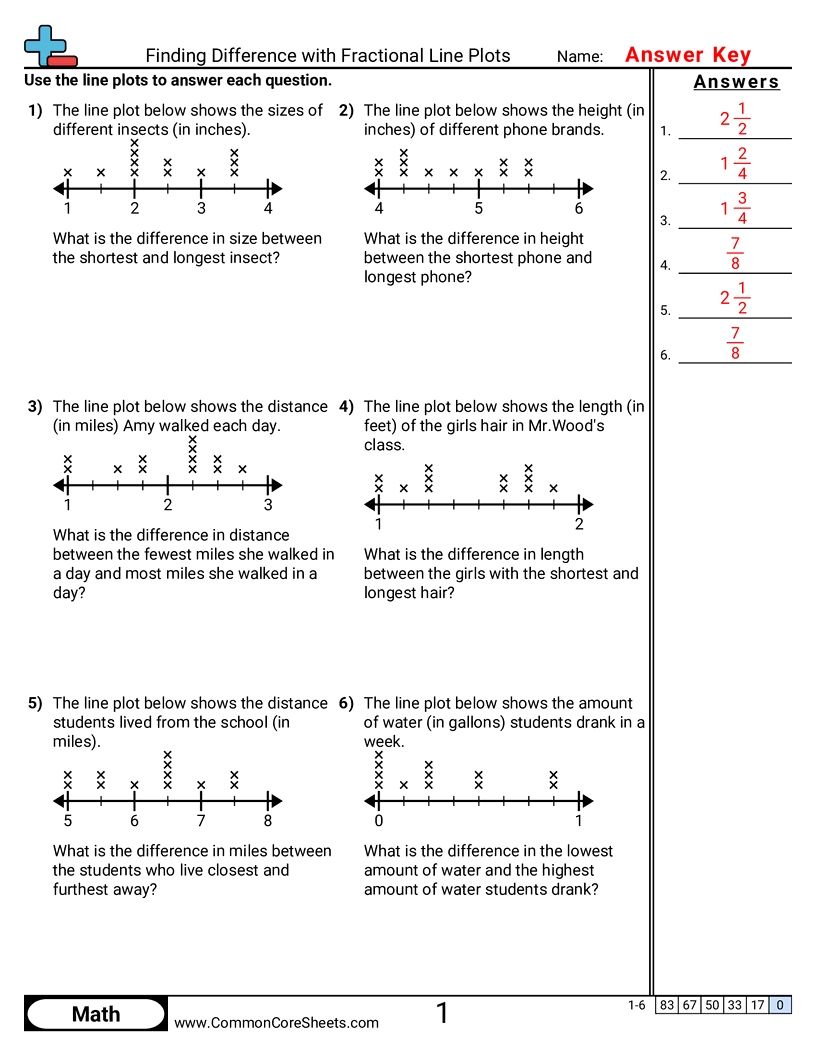
"This worksheet is designed to help children learn basic math concepts through engaging problems on finding the difference with fractional line plots. Each problem uses everyday scenarios to help children apply what they've learned. It incorporates examples from nature, personal habits, and classroom experiences. Suitable for distance learning, the worksheet allows for customization and can also be conveniently converted into flash cards for quick revision."
×Student Goals: